rabota
Коти
Cats
122
3 min
Cats often hide pain and discomfort, so dental and gum diseases can remain unnoticed for a long time. Owners usually notice the problem only when bad breath, refusal to eat, drooling, or visible gum inflammation appears.
At VetDental, we provide diagnostics, prevention, and treatment of dental diseases in cats. Regular oral examinations help detect dental tartar, gingivitis, stomatitis, periodontitis, and other problems that can affect a cat’s quality of life.
When does a cat need a veterinary dentist?
You should contact a specialist if you notice one or more of the following symptoms in your cat:
- bad breath;
- yellow or brown plaque on the teeth;
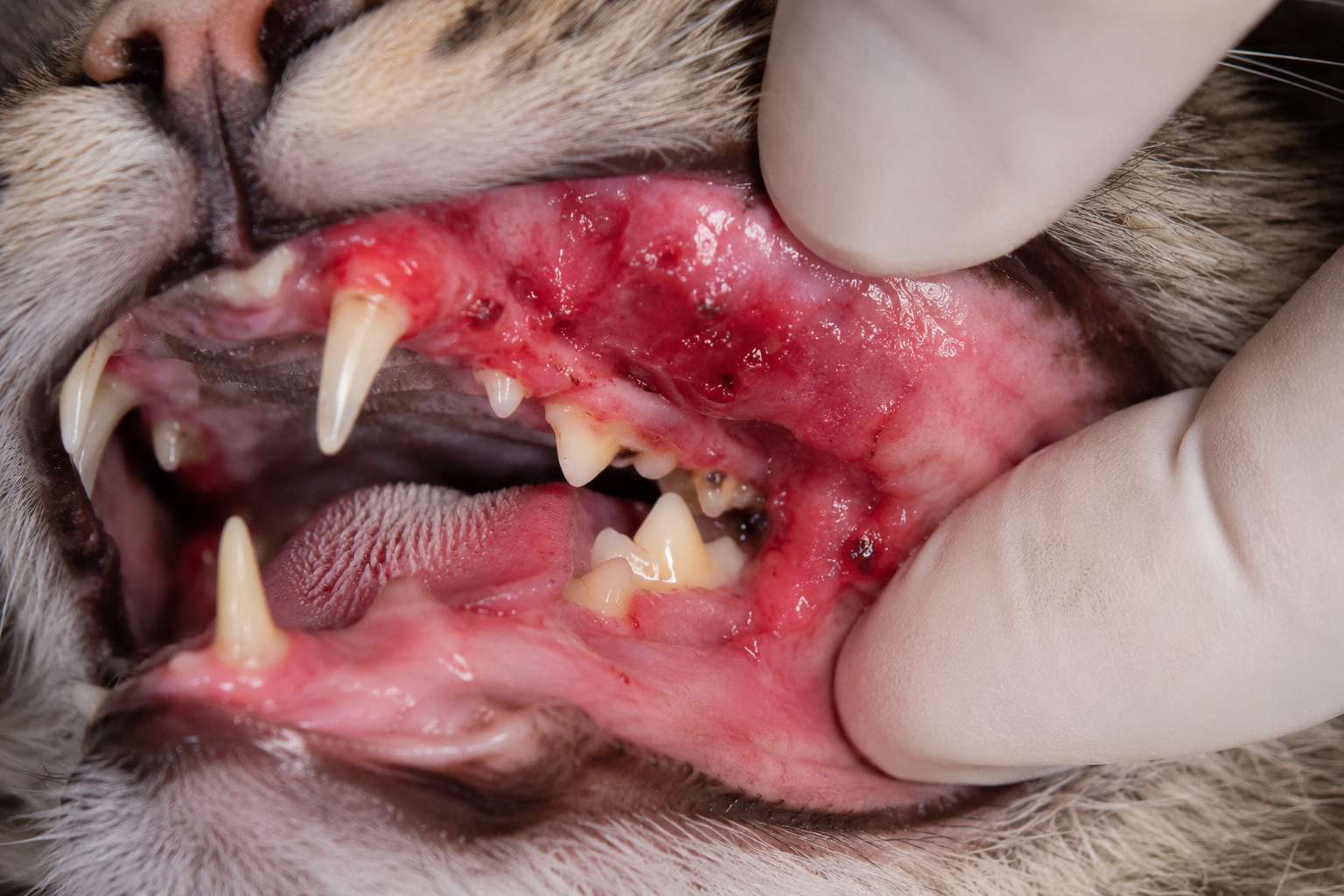
- redness, swelling, or bleeding of the gums;
- drooling;
- the cat eats worse or refuses dry food;
- chewing only on one side;
- touching the face with a paw or showing discomfort while eating;
- loose teeth;
- ulcers, inflammation, or pain in the oral cavity.
What dental problems are common in cats?
Cats often suffer from dental and gum diseases that require professional examination and treatment. The most common problems include:
- dental tartar — hard deposits on the teeth that can cause gum inflammation;
- gingivitis — inflammation of the gums, often accompanied by pain and bleeding;
- periodontitis — damage to the tissues around the tooth, which may lead to loose teeth;
- stomatitis — inflammation of the oral mucosa;
- tooth resorption — painful destruction of tooth tissue, commonly seen in cats;
- chronic gingivostomatitis — long-term inflammation of the oral cavity that requires a comprehensive approach.
Why should dental treatment for cats not be delayed?
Diseased teeth and inflamed gums are not only an oral problem. Chronic inflammation can affect appetite, behavior, weight, and the overall condition of the animal. A cat may become less active, eat less, lose weight, or become irritable.
In addition, bacteria from the oral cavity can create additional stress on the body. Timely diagnostics and treatment help not only relieve pain but also support the pet’s overall health.
What does a dental appointment for cats include?
Depending on the cat’s condition, a veterinary dentist may recommend:
- oral cavity examination;
- diagnostics of teeth and gums;
- professional teeth cleaning;
- dental tartar removal;
- treatment of gum inflammation;
- removal of non-viable or painful teeth;
- recommendations for home care and prevention.
Prevention of dental diseases in cats
Even if a cat looks healthy, the oral cavity should be checked regularly. Many dental diseases develop gradually and may not show obvious symptoms in the early stages.
A preventive examination helps detect dental tartar, gum inflammation, damaged teeth, and other changes in time. The earlier a problem is found, the easier and more effective the treatment usually is.
VetDental — dental care for cats
VetDental specializes in veterinary dentistry and helps cats with diseases of the teeth, gums, and oral cavity. If your pet has bad breath, plaque on the teeth, gum inflammation, or difficulty eating, do not postpone a visit to a specialist.
Healthy teeth and gums are an important part of a cat’s comfortable and active life.